


 Eesti
Eesti Suomi
Suomi Latviešu
 Lietuvių
Uncategorized
Breast cancer operations II

Oncoplastic breast-conserving surgery is a third and more aesthetic option alongside conventional/standard breast-conserving surgery and mastectomy. Oncoplastic breast-conserving surgery covers two fundamentally different approaches: 1) volume displacement and 2) volume replacement.
Conventional/standard breast-conserving surgery
To understand the cosmetic principles behind the two different approaches, it is useful to know how conventional/standard breast-conserving treatment is described. The aim of the surgery is to remove the tumour and the marginal tissue while damaging the breast as little as possible. At the same time, the surgeon has to remove enough tissue for analysis to determine whether the cancer is confined to the tumour tissue or has spread. The surgeon makes the incision over the targeted malignant tissue, or around the nipple if the tumour can be reached from there, and excises the tumour together with a thin layer of the surrounding tissue.

The tumour is removed with a margin of normal breast tissue.
The appearance after surgery depends on the amount of tissue removed, but the breast is left with a small scar and often a dent.
1) Volume displacement techniques
Unlike conventional/standard breast-conserving surgery, oncoplastic surgical techniques based on volume displacement have become increasingly popular for improving aesthetic outcomes and widening the options for breast-conserving treatment. They often involve reconstructive breast reduction or breast lift techniques, so that a medium to large resection can be carried out on the breast affected by cancer, combined with a symmetrising reduction or lift of the contralateral breast. Volume displacement procedures are only suitable for patients who have enough healthy breast tissue left to allow the breast to be reconstructed.
Typical incision sites for oncoplastic volume displacement are shown below. The letters mark the location of the tumour(s). The preferred type of incision depends on where the tumour is located.

2) Volume replacement techniques
Volume replacement combines breast-conserving surgery with immediate reconstruction of the breast using tissue taken from another area of the patient’s own body. As this is breast-conserving treatment, only a partial breast reconstruction is needed. The tissue used for the partial reconstruction (called a “mini-flap” or “flap”) usually comes from the area beneath the breasts or from the upper back (Latissimus dorsi or LD flap), but tissue from other areas, such as abdominal tissue, can also be used. In volume replacement surgery the tumour cavity is filled with mini-flaps to replace the tumour and the excised tissue.
Volume replacement techniques are more suitable for women who do not want surgery on the other breast and who have a relatively large tumour compared with their breast volume.
Breast-conserving surgery and partial breast reconstruction can be carried out either at the same time as a single-stage procedure or using a two-stage approach. Although patients prefer a single-stage procedure, complete removal of the tumour has to be confirmed by frozen section analysis during the operation. A frozen section is a pathology laboratory procedure performed as a rapid microscopic analysis, and the principle of the procedure is to examine the tissue while the operation is still in progress.

Local tissue transferred. The original blood supply is preserved.

A flap in which the original blood supply is not preserved.
General information about volume displacement and volume replacement techniques
Volume displacement techniques have some advantages over volume replacement techniques: the operation takes less time, it is less extensive and there is no damage to a donor site. However, for patients who do not want surgery on the other breast, for patients with small breasts or where the tumour is large in relation to the breast tissue, volume displacement may not be a suitable approach. In such cases volume replacement techniques can help.
The need for a post-operative bra after surgery
Many surgeons and breast care nurses recommend using a post-operative bra after conventional/standard breast-conserving surgery as well as after volume displacement and volume replacement surgery, because the bra gives the treated breast essential support, fixation and stability.
A post-operative bra also holds the dressings in place after the operation, reducing the need for frequent dressing changes, which in turn lowers the risk of infection.
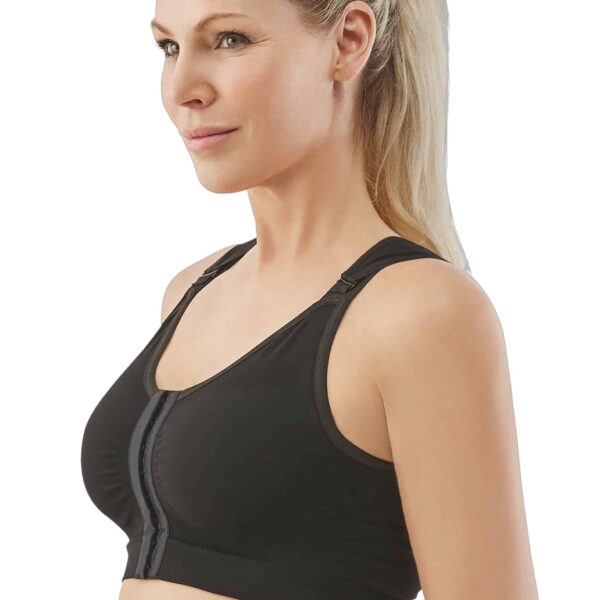
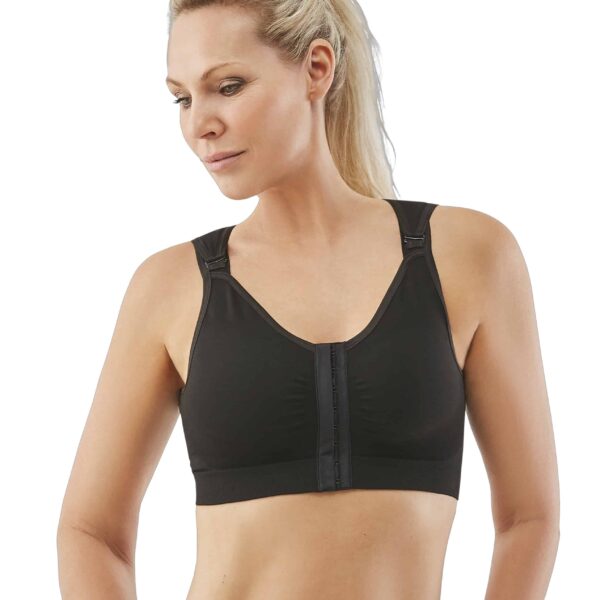
To make the area with the drainage tubes more comfortable, the bra fabric and the underbust band are made of soft and flexible material. In addition, the loops on the bra band (for example on the Carefix Marianne bra) help to secure the drains so that the drainage tubes are not pulled. This makes the whole drainage system easier to handle.
The functional purpose of post-operative bras is to create haemostasis and reduce swelling, in order to lower the risk of infection and speed up the overall healing process. In this way the bra supports the surgical outcome. The preferred level of compression may vary from surgeon to surgeon. The degree of compression can always be adjusted by choosing the size.
Some post-operative bras have pockets and are therefore double-layered, which provides better compression and fixation and makes it possible to wear pads made of lightweight material. The bra and the soft pads are comfortable and improve body image, giving the body an aesthetic and symmetrical appearance in case of asymmetry.
The support of a post-operative bra can also reduce post-operative pain and the tenderness of sensitive skin and the underlying structures, making recovery more comfortable.
When a post-operative bra provides protection, a woman may feel safer, especially if she becomes mobile soon after the operation.
If the bra has a high back, it helps to prevent tension and pain in the neck, shoulders and upper back by providing support that helps the woman maintain a normal posture (posture correction).
The bra normally has to be worn for at least 6-8 weeks after breast-conserving surgery. During the first weeks the bra should be worn both day and night. After that the bra can be worn during the daytime only.
Carefix post-operative bras
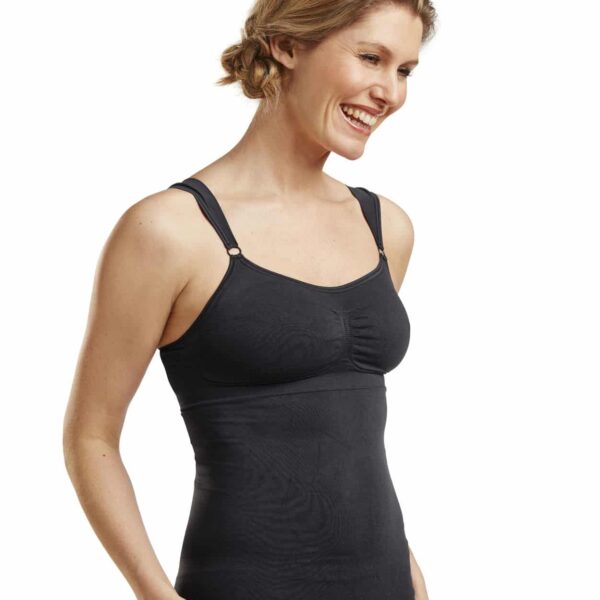
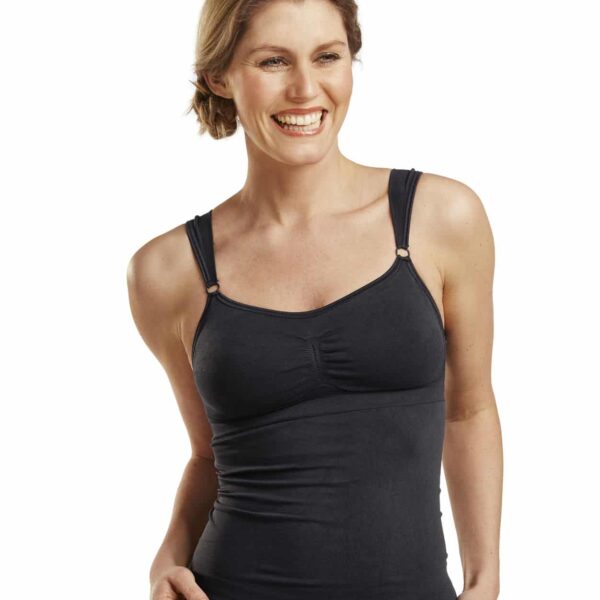
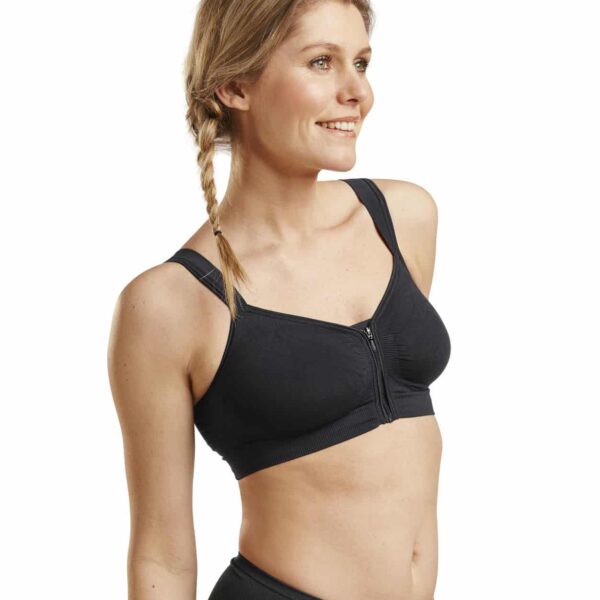
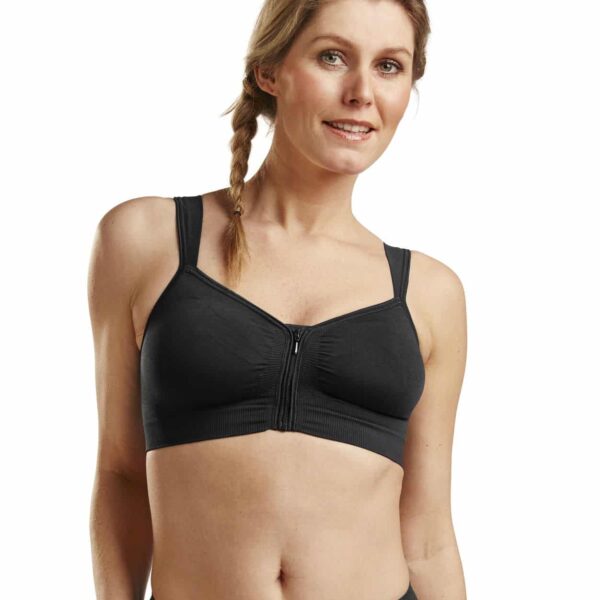
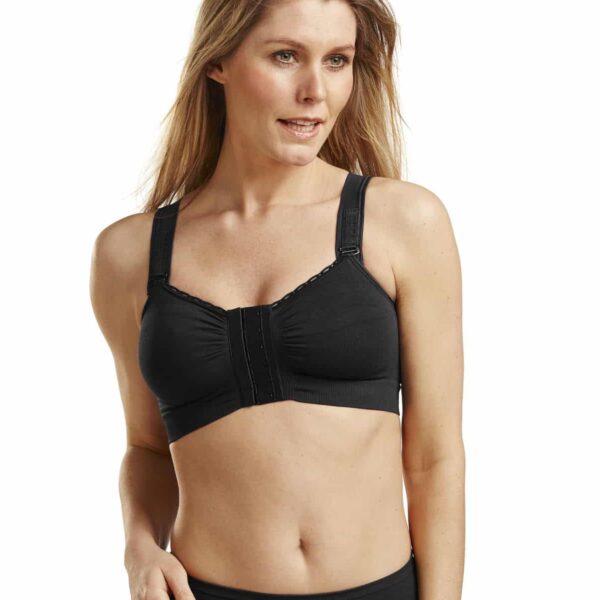
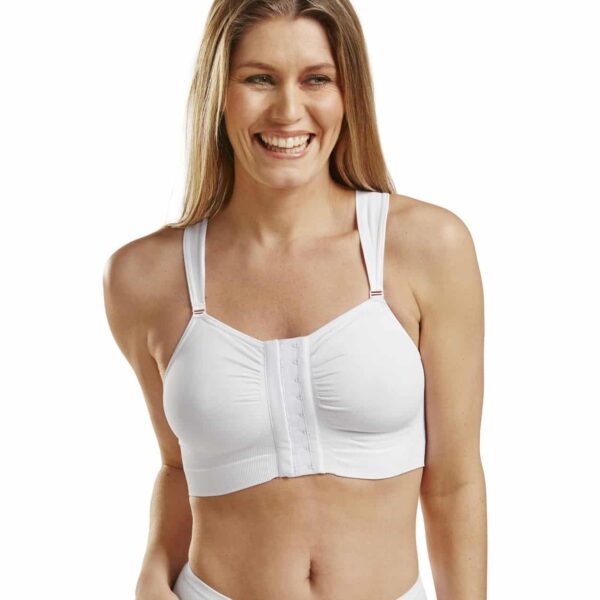
The Carefix range of seamless post-operative bras meets all of the criteria described above and offers an ideal choice of bras after every type of breast cancer surgery.
Source: https://tytex.com/oncoplastic-surgery-breast-conserving-surgery-surgical-techniques


Bras
Bras


Bras


Bras
Bras
Bras

Bras

Bras
